
Websites
How to Choose a Website Design Company in Jaipur
Compare website partners on customer journeys, content, ownership, testing and support. Use the same written brief to understand what each quote includes.
The quick answer
Choose a website partner by testing relevant work, comparing written scopes and confirming ownership, content responsibilities and support. Agree how the finished enquiry or purchase journey will be accepted.
One website proposal promises five pages. Another promises a “complete business website”. Neither description tells you whether a visitor can find the right service and send an enquiry that your team receives.
For a Jaipur business, compare partners around the customer task and the work needed to support it. A local meeting can help clarify requirements, but a reviewable scope and working delivery process matter throughout the project.
Define What Customers Should Be Able to Do
Choose the primary action: request a quote, book an appointment, browse a catalogue or buy online. Name the services or products that need their own information. Explain which regions you actually serve rather than asking for repeated city pages.
Write down the current problem and the evidence you have. If visitors submit a form but your team cannot find the message, that is a delivery problem to investigate before assuming the entire design must change.
Try Relevant Websites on Your Phone
Open the portfolio examples and try the main journey. Can you understand the offer, use the menu, read the text and find the next step? Ask which work the provider delivered and whether an example is a live client site, a working preview or a visual concept.
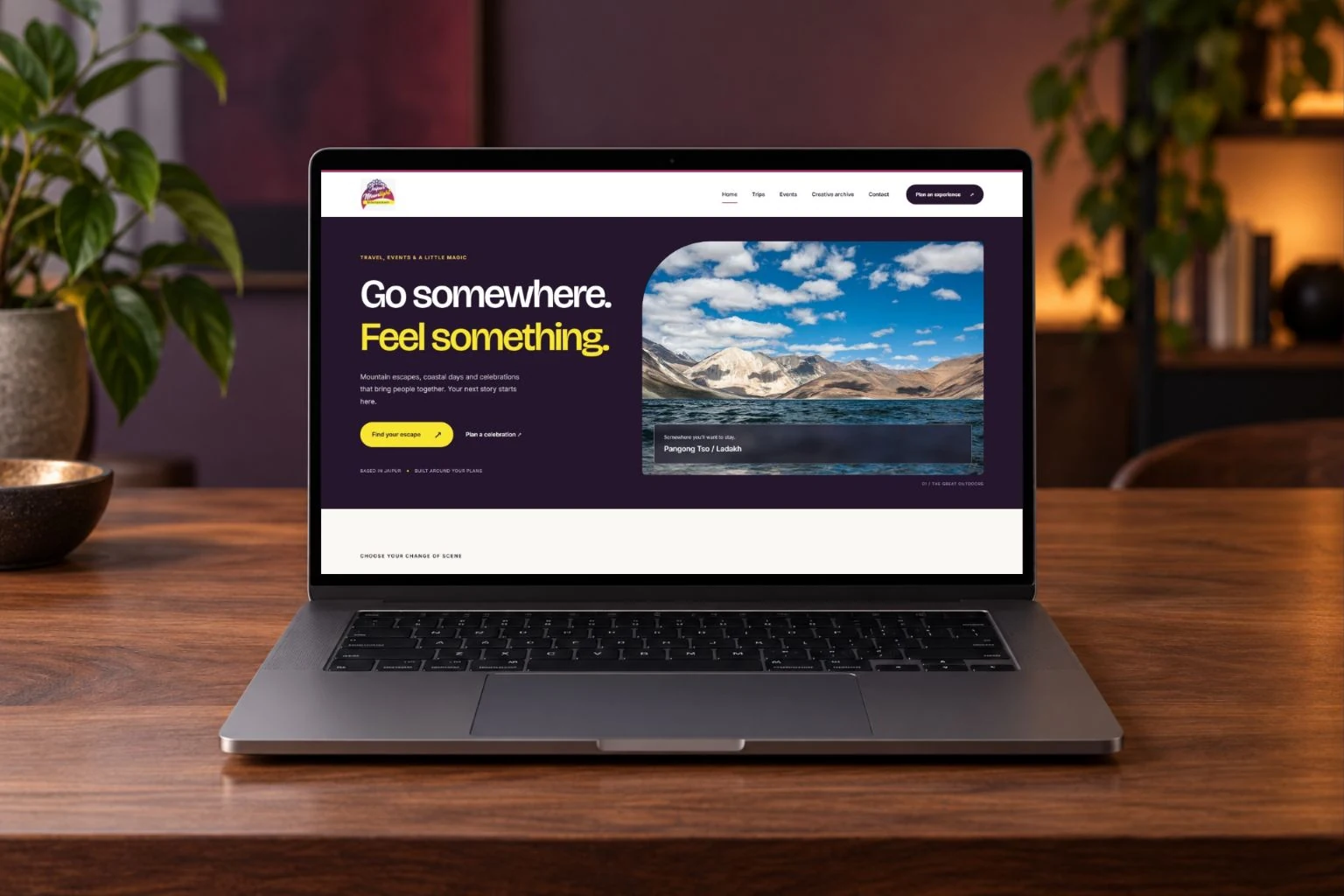
The Jaipur Moonlight project includes a working website preview and presentation mockups. The preview lets you review page structure and enquiry fields; a laptop mockup shows presentation, not independently measured traffic or campaign results.

Compare the Same Scope Across Proposals
Ask both providers to respond to one brief. Include content entry, responsive layouts, integrations, training and launch checks. Confirm any limits on pages, products, revision rounds or migration work.
| Item | What to confirm | Why it matters |
|---|---|---|
| Content | Who writes, supplies and uploads it? | An empty template is not a finished website |
| Enquiries | Destination, validation and receipt test | A visible form must reach the right team |
| Ownership | Domain, platform, source and admin access | Your business needs a usable handover |
| SEO | Specific technical and content deliverables | “SEO included” is too vague to compare |
| Support | Duration, response expectations and exclusions | Ongoing work needs its own scope |
Set Acceptance Checks Before Paying for Launch
Agree a short set of tasks the finished site must pass. For example: a phone visitor finds packaging services, sends a labelled enquiry and sees confirmation; the team receives the correct details. Test failures and empty fields as well as the happy path.
For a rebuild, ask for a plan for existing URLs, useful content and redirects where addresses change. Check that search restrictions used during development are reviewed at launch. Do not accept a ranking guarantee in place of specific deliverables.
Confirm Who Maintains the Website After Launch
List domain and hosting renewals, platform fees, paid plugins and third-party services separately from the initial build. Confirm who can edit content, who receives enquiries and what happens if you later change suppliers.
Ask for a scope that fits the next stage of your business. Zaapart can discuss a focused website project or coordinate the agreed brand, content and digital work from one brief.